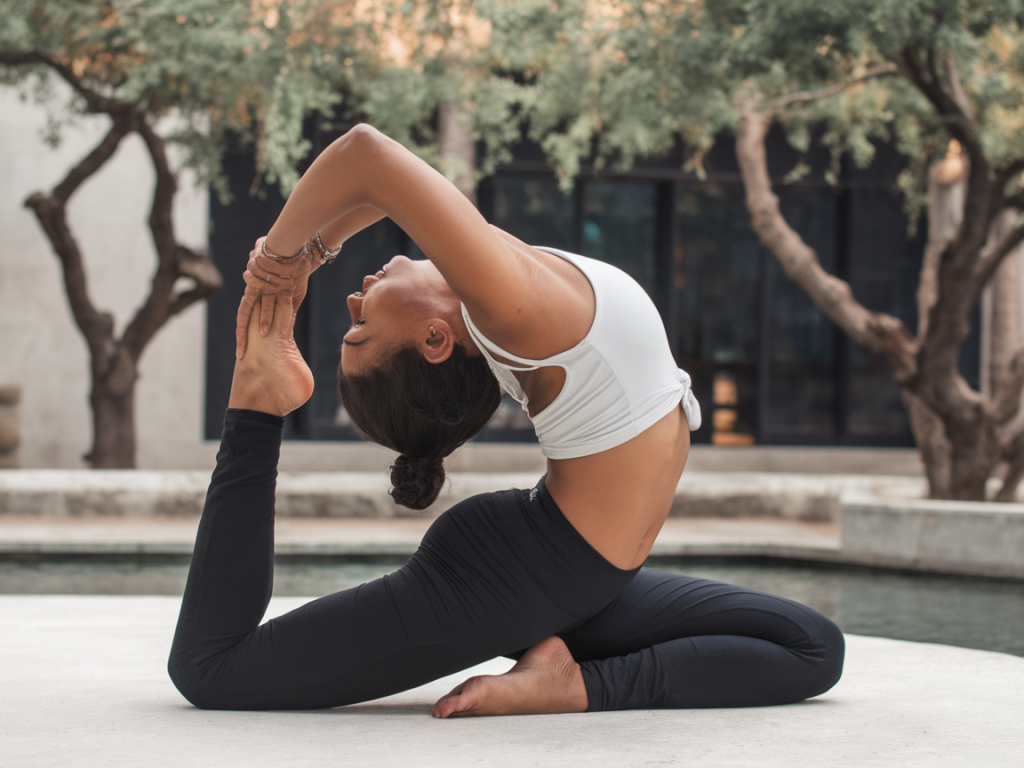
If you've ever watched your stride shorten or felt a nagging pinch in your hips halfway through a 5K, you're not alone. I built this 6-week yoga-to-strength program because I wanted a practical, time-efficient way to loosen tight hips and convert that newfound mobility into faster, more powerful running. Over the years I've blended yoga's mobility work with targeted strength training to shave seconds off my 5K without sacrificing recovery or adding marathon-level training volume. Below is the plan I actually use and refine, plus the why and how behind each piece.

Why tight hips cost you time (and how yoga helps)

Tight hips reduce hip extension and limit stride length. When your glutes and hip flexors aren't doing their job, you compensate with extra torso rotation or a higher cadence—both of which burn energy and slow you down. Yoga helps by improving range of motion, increasing neuromuscular control, and calming the nervous system so your muscles can actually release. But mobility alone isn't enough: you need strength in the new range to use that mobility for faster, more efficient running.

Principles behind the 6-week program

This plan blends three complementary elements: daily short mobility, focused strength sessions 2–3 times per week, and maintaining running work at a race-specific intensity. The goals are:

  • Restore hip mobility through consistent, progressive yoga-based stretches.
  • Build strength in end-range positions so you can apply mobility during your 5K stride.
  • Keep running specificity so gains transfer directly to race performance.
  • How to use this program

    Commit to at least six weeks. Each week has two focused strength sessions (30–40 minutes), three short mobility sessions (10–20 minutes), and 2–3 running workouts as you normally would—replace one easy run with a short speed session most weeks. If you're pressed for time, prioritize the mobility every day and do the strength sessions on non-consecutive days.

    Weekly layout (overview)

    Monday Strength Session A + 10–15 min post-session yoga
    Tuesday Easy run or intervals (depending on your plan) + mobility flow
    Wednesday Mobility session (15–20 min)
    Thursday Strength Session B + short yoga flow
    Friday Easy run + mobility
    Saturday Short tempo or fartlek run + mobility
    Sunday Rest or restorative yoga

    Detailed session templates

    Below are the mobility and strength sessions with progressions. You don't need fancy equipment—dumbbells, a kettlebell, and a resistance band are enough. I like to use a 12–16 kg kettlebell for single-leg work; your weight will vary.

    Daily mobility flow (10–15 minutes)

  • 90/90 breathing & hip rotations (2 minutes) — Start lying on your back or seated; breathe into the hips, gently rotate through internal/external rotation.
  • World's greatest stretch x 6 each side — Focus on thoracic rotation and hip flexor stretch.
  • Kneeling hip flexor stretch with posterior pelvis tilt 3 x 30s each side — Active core, glute squeeze to deepen stretch.
  • Half pigeon with dynamic fold x 6 each side — Work to relax the external rotators.
  • Bridge hold 3 x 30s — Activate glutes in full extension.
  • Strength Session A (30–40 minutes)

  • Warm-up (5–7 min) — Light cardio + dynamic leg swings.
  • Bulgarian split squats 3 x 6–8 per leg — Focus on upright torso and deep hip flexion. Use dumbbells or kettlebell.
  • Single-leg Romanian deadlift 3 x 6–8 per leg — Trains hip hinge and posterior chain control.
  • Glute bridge march 3 x 12 total — Keep hips level; emphasize glute drive.
  • Lateral band walks 3 x 15 steps each way — Targets the glute medius for stability.
  • Finish with 10–15 min yoga flow — Focus on hip openers like low lunge, pigeon, and supine twists.
  • Strength Session B (30–40 minutes)

  • Warm-up (5–7 min) — Dynamic mobility and activation drills.
  • Forward step-ups 3 x 8 per leg (add weight) — Step onto a 20–30 cm box; drive through the heel.
  • Cossack squat 3 x 6–8 per side — Go as deep as mobility allows; keep heel down.
  • Nordic hamstring negatives or eccentric slide 3 x 5–6 — If you can do Nordics safely, they’re gold for eccentric hamstring strength.
  • Single-leg calf raises 3 x 12 — Important for stiffness and elastic return in running.
  • End with 10 min restorative yoga — Emphasize breathing and relaxation.
  • Progressions over 6 weeks

  • Weeks 1–2: Focus on form. Use lighter weights and emphasize full range in mobility work. Run workouts should be shorter intervals (e.g., 6x400m at 5K pace with full recovery).
  • Weeks 3–4: Increase load or reps on strength exercises. Add a few longer holds in mobility (45s). Run intervals can become slightly longer (e.g., 4x800m at slightly faster than 5K pace).
  • Weeks 5–6: Aim for heavier single-leg strength (lower reps, controlled tempo). Keep mobility consistent and integrate more race-pace efforts in running (e.g., 3x1 mile at goal 5K pace or tough tempo runs).
  • Key exercises explained (form cues)

  • Bulgarian split squat: Keep front knee tracking over toes, chest up, push through midfoot. Think glutes doing the work to stand up.
  • Single-leg Romanian deadlift: Hinge at the hip, maintain a neutral spine, and reach the weight toward the ground as the free leg moves back. Slight bend in the standing leg.
  • Cossack squat: Shift hips back like sitting, keep the non-working foot flat if possible. This builds adductor length and single-leg control.
  • How to measure progress

    I track three things weekly: hip mobility range, single-leg strength, and timed running efforts.

  • Mobility test: Use a simple measure like how close your chest can get to your thigh in a half-pigeon or the depth of a Cossack squat on each side.
  • Strength test: Increase in split squat or single-leg deadlift weight/reps is a direct indicator.
  • Running test: Every two weeks do a 3K time trial or a 5 × 1 km at 5K pace with short recoveries—note perceived effort and time. You should see a drop in time or feel less effort for the same pace.
  • Recovery, sleep and small details that matter

    Mobility and strength are only part of the equation. Sleep, nutrition, and hydration determine how quickly your tissues respond. I aim for 7–9 hours of sleep on training weeks and prioritize protein intake (roughly 1.4–1.8 g/kg for active runners). Foam rolling or a lacrosse ball can help with recurring tight spots, and I often use a heating pad briefly before mobility to help tissues relax.

    Common pitfalls and how I avoid them

  • Doing too much yoga, too little strength: Mobility without strength can make you flexible but not powerful. Balance both.
  • Skipping single-leg work: Running is single-leg dominant—train it that way.
  • Expecting overnight miracles: Mobility gains are gradual. Consistency beats intensity here.
  • If you're ready to sharpen your running by freeing up those hips, start with a simple commitment: 10 minutes of mobility every day for one week, then add Strength Session A. Over six weeks you'll likely notice your stride feels longer, your legs feel more powerful, and your 5K efforts feel a little lighter—sometimes that's all it takes to shave off those precious seconds.

    For more weekly tips, check out Sport News at https://www.sport-news.uk where I share training guides, mobility flows, and race strategies that helped me—and many readers—run better and feel stronger.