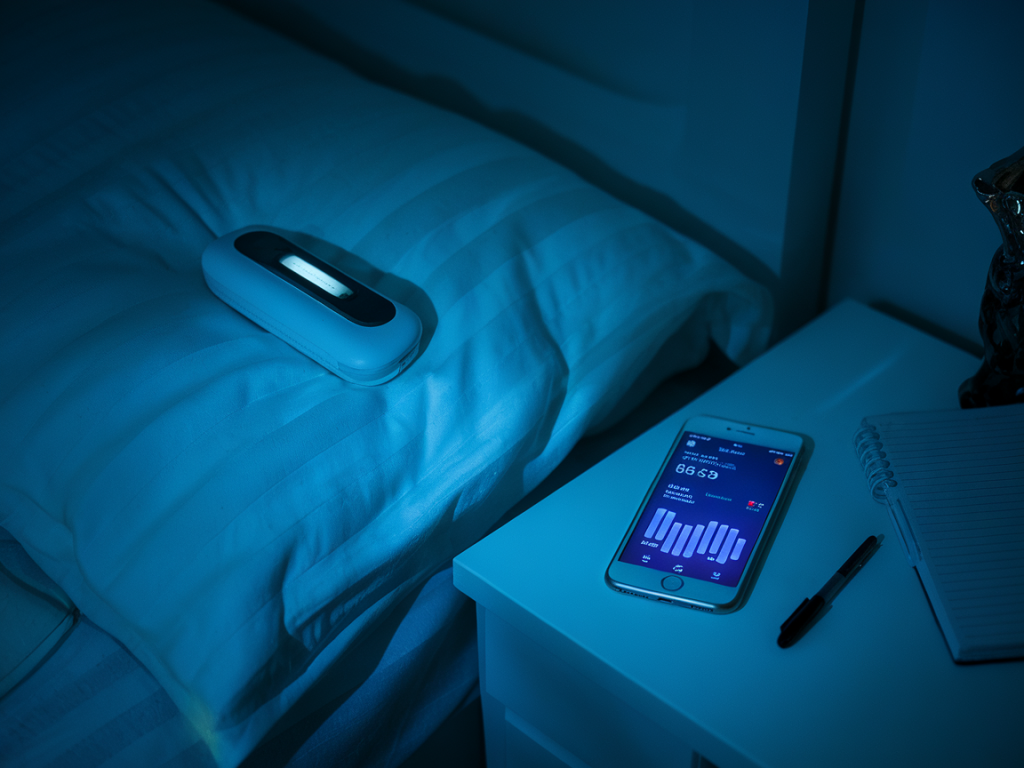
When I first strapped a sleep tracker to my wrist, I was convinced it would instantly reveal the secret formula to faster recovery: a single number to tell me whether I should hit the gym hard or take the day off. Years later, after trying several devices (Whoop, Oura, Fitbit, Apple Watch) and testing both mattress sensors and wrist-based trackers, I’ve learned that sleep trackers can be powerful tools — but only if you know which metrics to trust, how to interpret trends, and where devices still fall short.
What sleep trackers actually measure (and what they estimate)
Most consumer devices combine motion sensors, heart rate data, and sometimes skin temperature or blood oxygen to estimate sleep. Motion helps identify when you're immobile (likely asleep), heart rate patterns and heart rate variability (HRV) inform sleep stage estimation, and temperature or SpO2 can hint at disturbances. But it’s important to remember: many metrics are inferred, not directly measured.
- Total sleep time: Usually the most reliable—it's based on sustained immobility and consistent heart rate patterns.
- Sleep stages (light, deep, REM): Estimated from HR and movement. Accuracy varies widely across devices and is not as precise as polysomnography (lab-grade sleep studies).
- Sleep efficiency and awakenings: Fairly useful for spotting fragmented nights, although short wake-ups can be missed or falsely detected.
- HRV and resting heart rate (RHR): Measured during sleep or morning rest. HRV in particular can be informative for recovery—if tracked consistently.
- Respiratory rate and SpO2: Available on some devices and helpful for identifying trends (e.g., possible breathing issues), but single-night readings require cautious interpretation.
Which metrics I actually trust for recovery decisions
After comparing data across devices and matching it with how my body felt, I’ve come to rely on a few core metrics that have practical value when planning training and recovery.
- Consistency of total sleep time: If my total sleep time drops by an hour or more for multiple nights, it’s a reliable signal I need to back off or prioritize sleep hygiene.
- Resting heart rate trends: An elevated RHR over several days often correlates with fatigue, illness, or overreaching. I don’t panic over a single night’s blip, but persistent elevation is actionable.
- Nightly HRV trend (baseline comparison): HRV differs greatly between people, so I watch relative changes from my baseline rather than absolute numbers. A notable, sustained drop in HRV often means reduced parasympathetic activity — a cue to lower training load or emphasize recovery.
- Sleep continuity and fragmentation: Multiple short awakenings and reduced sleep efficiency correlate with worse daytime performance and mood for me more than a small change in REM percentage.
- Bed and wake consistency: Regular sleep timing has the biggest overall impact on recovery. Trackers are great at revealing irregular schedules I otherwise ignore.
Metrics I’m cautious about — and why
Some metrics are tempting (deep sleep %, REM minutes), but I use them cautiously because they’re often approximations.
- Sleep stage percentages: Devices disagree with each other and with clinical polysomnography. I find trends useful (e.g., consistent loss of deep sleep over weeks), but I don’t make immediate training decisions based on a single night’s REM variance.
- Single-night HRV or SpO2 spikes: Both can be affected by device fit, movement, sensor placement, and algorithm quirks. A single anomalous reading doesn’t change my behavior; a multi-night pattern does.
- “Recovery scores” from apps: These composite numbers (Whoop’s strain/recovery, Oura's readiness) are helpful as a quick glance, but they hide assumptions. I use them as conversation starters, not gospel.
How I interpret trends (my practical approach)
Data without context can mislead. Here’s the simple routine I follow before changing a training plan based on my tracker:
- Check the rolling average over 3–7 nights, not a single night.
- Compare to my baseline (what are typical values for me over weeks?).
- Cross-reference how I feel: energy levels, mood, soreness, focus.
- Put lifestyle factors on the table: travel, alcohol, stress, late meals, caffeine, or disrupted schedule.
- If metrics and subjective feelings align (e.g., lower HRV + elevated RHR + feeling flat), adjust training.
How different devices stack up (practical summary)
I’ve tried or analyzed data from leading trackers. Here’s a simplified comparison of common types and their relative strengths for recovery metrics.
| Device type | Best for | Limitations |
|---|---|---|
| Wrist wearables (Whoop, Oura, Apple Watch, Fitbit) | HR, HRV trends, total sleep time, sleep timing, readiness scores | Sleep stage accuracy varies; sensitive to device fit and movement |
| Ring wearables (Oura) | Comfort, consistent night-time HR & HRV, minimal interference | Smaller sensor area; still not clinical-grade for sleep staging |
| Chest straps | Very accurate HR and HRV during sleep measurement windows | Not comfortable for night wearing long-term |
| Mattress sensors (Withings Sleep, mattress pads) | Sleep staging and breathing estimation without wearing anything | Less accurate for HRV and can be fooled by bed partner or pets |
Practical tips I use to get useful sleep data
These are small changes that improved the signal-to-noise ratio of my sleep tracking:
- Keep the device snug and consistent: A loose band creates artifacts and false wake-ups.
- Establish a baseline: Use at least two weeks of consistent tracking to learn your normal ranges before making decisions.
- Use device-specific guidance: Each brand has a slightly different algorithm — learn how your device defines metrics like “readiness” or “strain.”
- Don’t obsess over nightly fluctuations: Sleep varies naturally. I focus on meaningful shifts over several days.
- Log context: Note alcohol, travel, late workouts, stress. Context helps explain weird nights without misattributing cause to the tracker.
How I integrate tracker data into training
When planning my training, I treat tracker insights as one input among several. If HRV drops and RHR is elevated for 3+ days and I feel off, I reduce intensity or prioritize an endurance/technique session over high-intensity intervals. Conversely, a high readiness score coupled with good sleep consistency might be the green light to push a key workout.
Importantly, I use the tracker to guide recovery actions — extra sleep, naps, nutrition focus, or mobility work — rather than just to cancel workouts. This mindset turns data into proactive recovery, not a pass/fail test.
Red flags you shouldn’t ignore
- Persistent elevation in RHR for several days with worsening fatigue — consider medical evaluation.
- Large, sustained drop in HRV with poor sleep continuity — adjust training and stress management.
- Consistent decline in respiratory rate or unexplained drops in SpO2 during sleep — discuss with a clinician, especially if combined with daytime tiredness or snoring.
Sleep trackers have changed how I approach recovery: from guesswork to data-informed decisions. They’re not perfect, but when used with good habits, personal context, and sensible interpretation, they become one of the most useful tools in a modern athlete’s kit. Use trends, not single nights; trust heart-rate-derived metrics for recovery more than precise sleep-stage breakdowns; and always pair numbers with how you actually feel.