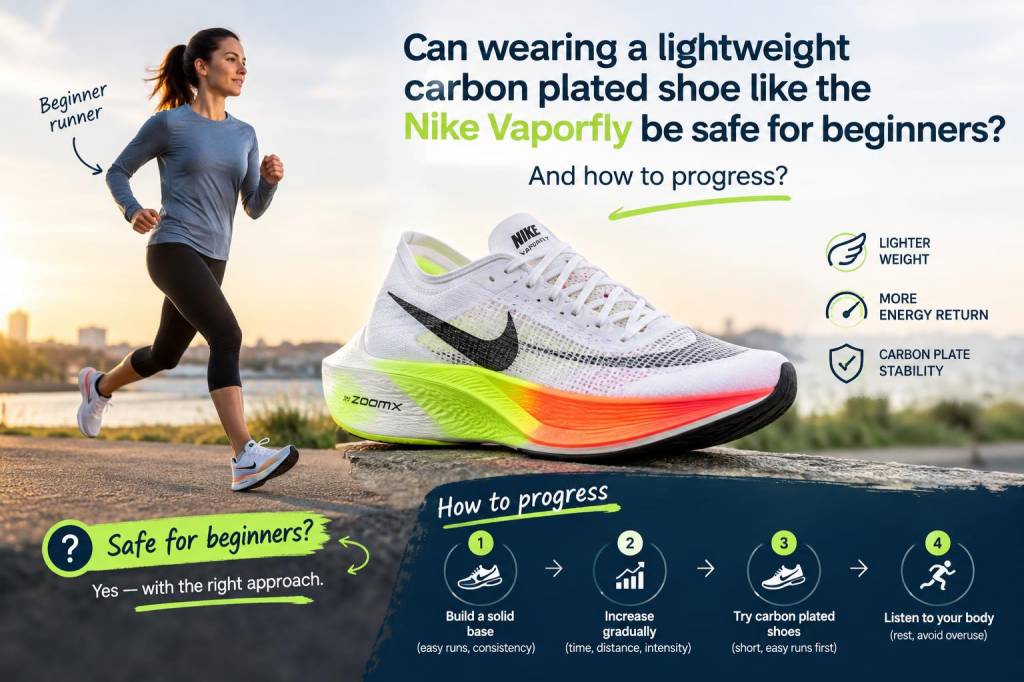
I remember the first time I tried on a pair of carbon-plated running shoes — the feeling was almost magic. The midsole felt springy, the forefoot propelled me forward, and I suddenly imagined myself slicing seconds off every mile. If you're a beginner curious about shoes like the Nike Vaporfly (or similar carbon-plated models), you're not alone. These shoes promise performance gains, but they also raise sensible questions: Are they safe for someone new to running? How should you introduce them into your routine? Below I share my experience, practical advice, and a step-by-step progression plan that helped me and many runners I coach use these shoes safely.
What makes carbon-plated shoes different?
Carbon-plated shoes combine a thick, responsive foam midsole with a stiff carbon fiber plate embedded in the sole. The plate adds longitudinal stiffness, which can improve running economy by storing and returning energy and by creating a more efficient toe-off. Brands like Nike (Vaporfly, Alphafly), Adidas (Adizero Adios Pro), and Hoka (Carbon X) have popularized this tech.
Important to remember: these shoes change mechanics subtly — they can alter your stride length, increase your forward lean, and shift forces across your foot and lower leg. That’s why a cautious, thoughtful transition is essential, especially for beginners.
Are carbon-plated shoes safe for beginners?
Short answer: yes, but with caveats. I believe they can be safe if introduced progressively and combined with proper training habits. Here’s what I consider before recommending them to a beginner:
How I introduced carbon-plated shoes as a beginner
When I first transitioned, I treated the shoes like a tool for quality workouts, not everyday training. Here’s the approach I used and that I recommend:
Gradual introduction plan (practical week-by-week)
| Week | Carbon shoe use | Notes |
| 1 | 1 easy run (20–30 min) | Wear carbon shoes only for a short, easy test run to feel the geometry |
| 2 | 1 quality session (intervals) + 1 easy short (20 min) | Use them for workouts where they shine (tempo/intervals) |
| 3 | 2 workouts (1 tempo, 1 intervals) | Avoid long runs in carbon yet; keep easy runs in trainer |
| 4 | 1 workout + 1 medium run (45–60 min) | Monitor soreness (calves, Achilles, forefoot) |
| 5–8 | Gradually increase to 2–3 uses/week (including one long run) | Keep long runs to part of the distance initially; alternate with trainer |
This table is a guideline — adjust by feel. If you notice niggles, back off and return to trainers until symptoms resolve.
Training use cases: when to wear them
I personally reserve carbon-plated shoes for:
Common risks and how I mitigate them
From experience and from working with runners, here are the typical issues and how I handle them:
Practical tips for buying and fitting
When I bought my first Vaporfly-like shoes I did these things:
Alternative approaches if you’re not ready
If you feel carbon-plated shoes are premature, here are my alternatives:
How I monitor progress and stay safe
I keep a simple checklist to decide if I can step up carbon use:
Finally, listen to your body. If you feel persistent soreness that doesn’t improve in a few days, step back, cross-train, and consult a physiotherapist. Carbon-plated shoes can be safe and incredibly motivating when used wisely — they’re a tool to complement your training, not a shortcut to fitness.