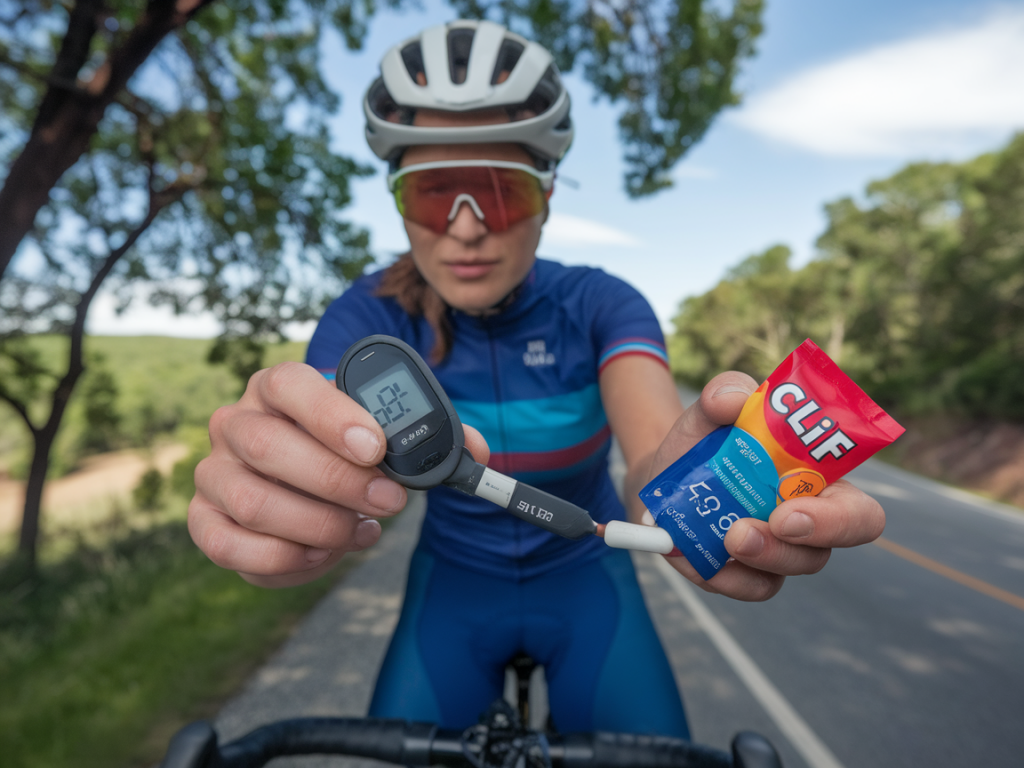
I used to dread that sinking feeling halfway through a long ride — the foggy brain, heavy legs, and the desperate search for sugar at the next aid station. Over time, I learned to treat bonking like a problem to be solved, not an inevitability. One of the biggest game-changers for me has been pairing a continuous glucose monitor (CGM) with targeted fueling products like Tailwind endurance fuel and Clif Energy Gels. In this article I’ll share how I use a CGM in real time to plan, adjust, and optimize my carbohydrate intake on rides over three hours so I can maintain steady power and stay sharp.
Why use a CGM on long rides?
A continuous glucose monitor gives you a live window into your blood sugar so you can see how your body responds to effort and fuel. Instead of guessing when to eat, I can see trends — rises, dips, and how quickly glucose recovers after a gel or sipping Tailwind. For me that has meant fewer unexpected bonks and smarter choices about what and when to consume.
CGMs are particularly useful because:
- They show directionality — not just a number but whether glucose is rising, falling, or stable.
- They capture delayed responses — some fuels spike glucose quickly, others more slowly.
- They allow personalized fueling — what works for one rider might over- or under-fuel another.
The gear I use
I ride with a small CGM transmitter on my upper arm (I use a popular consumer model compatible with smartphone apps). For nutrition I rely on two staples:
- Tailwind Endurance Fuel — a mix of carbohydrates, electrolytes, and calories designed to be sipped regularly.
- Clif Energy Gels — concentrated carbohydrate gels that deliver a quick glucose hit when I need it.
I bring water, a flask of Tailwind mixed to my usual concentration (I’ll explain concentrations below), three to five gels depending on ride length, and a backup solid snack (banana or fig bar) just in case.
How I set my baseline before the ride
Before I head out, I check my CGM to make sure I’m not starting too low. If my glucose is below my usual fasting baseline (for me that’s around 95 mg/dL), I’ll take a small carbohydrate snack 20–30 minutes before rolling — typically 15–20 grams of fast carbs (half a Clif gel or a small piece of banana). If I’m above baseline and stable, I’ll start sipping Tailwind immediately.
I also consider recent meals and sleep. A big pre-ride meal high in fat or protein can blunt the immediate glucose response, so I either start sipping Tailwind earlier or keep a gel within easy reach for the first 60 minutes.
Establishing a fueling plan with CGM feedback
I break rides into three phases and use the CGM to guide timing and quantity of carbs:
- Phase 1 — First hour (settling in): Sip Tailwind from minute 0. My aim is to prevent an early drop as adrenaline and initial effort can cause glucose to dip. I usually consume 200–300 kcal of Tailwind in that hour (roughly 30–45g carbs) depending on intensity.
- Phase 2 — Mid-ride (hours 1–3): Continue sipping Tailwind regularly and monitor the CGM trend. If glucose shows a steady decline or a downward arrow, I take a 20–30g carb gel (one Clif gel provides about 25–30g depending on flavor) and re-check the CGM. If the trend is stable, I may hold off on gels and keep sipping.
- Phase 3 — Final hours (3+ hours): I become more proactive here because glycogen depletion risk increases. I plan a gel roughly every 30–45 minutes once the CGM shows glucose trending down or if my power output rises. Tailwind continues as background fuel and electrolytes.
Practical rules I follow with the CGM
- React to trends, not single numbers. A single low value isn’t the whole story — the direction arrow tells me more.
- Don’t wait until you feel awful. Symptoms lag. If the CGM shows a rapid decline (e.g., >5 mg/dL per 5–10 minutes), I take action immediately.
- Use gels for fast corrections, Tailwind for steady supply. Gels spike glucose quickly; Tailwind provides sustained carbohydrate and electrolytes when sipped regularly.
- Test different gel timings in training. Race day is no time for experimentation. I trial different intervals and quantities in long training rides.
How much carbohydrate and when — sample table
| Ride phase | Carb strategy | Typical amounts |
|---|---|---|
| 0–60 min | Sip Tailwind; small pre-ride snack if starting low | 30–45 g carbs via Tailwind + 0–20 g pre-snack |
| 60–180 min | Sip Tailwind continuously; gel if CGM trending down | 20–30 g gel as needed; Tailwind 30–60 g/hour (adjust) |
| 180+ min | Increase vigilance; gel proactively every 30–45 min if needed | 20–30 g gel every 30–45 min + Tailwind sipping |
Note: Individual needs vary widely. Endurance athletes often aim for 60–90 g carbs/hour during long, high-intensity rides, but that depends on gut tolerance and training.
What I do when glucose drops suddenly
Despite my best efforts, I still encounter quick drops. Here's my immediate routine, informed by CGM readings:
- If glucose <70 mg/dL or showing a steep downward arrow: take one Clif gel (20–30 g carbs) and follow with a few sips of diluted Tailwind to sustain the rise.
- If symptoms are severe (shaking, confusion): stop, sit, and take a gel or half a sports drink bottle. If in a group, ask for help — safety first.
- After correction, monitor the CGM closely for overshoot. Sometimes a gel causes a spike and then a rebound drop; balancing with Tailwind helps smooth that.
Mixing Tailwind for best CGM response
I prepare Tailwind according to the race or ride intensity. For long steady rides I usually mix at standard concentration (about 160–200 kcal per bottle depending on how many scoops and bottle size) so I get a steady stream of carbs without upsetting my stomach. If I know I’ll need higher hourly carbs (hard group ride or race), I either increase Tailwind concentration slightly or rely more on gels — always based on what my gut tolerates during training.
Common pitfalls and how I avoid them
- Over-reliance on CGM numbers: Never ignore how you feel. CGMs can lag about 5–10 minutes behind blood glucose.
- Gum or candy delays: Some quick sugars take longer to appear in CGM traces depending on digestion; gel is the most consistent emergency fix.
- Ignoring hydration and electrolytes: Low electrolytes can feel like bonking; Tailwind covers both carbs and electrolytes so it’s my go-to base.
- Not practicing in training: I simulate race scenarios (e.g., 4-hour ride with climbs) to refine timing and volume for gels and Tailwind.
Final tips from my experience
Start with a baseline carb plan, but let the CGM guide you in real time. Trust the direction arrows and use gels for fast corrections and Tailwind for steady intake. Practice your plan until it's second nature. When everything clicks — the right mix of continuous sipping and timely gels — those three-hour-plus rides stop being a battle and become the best kind of day on the bike.