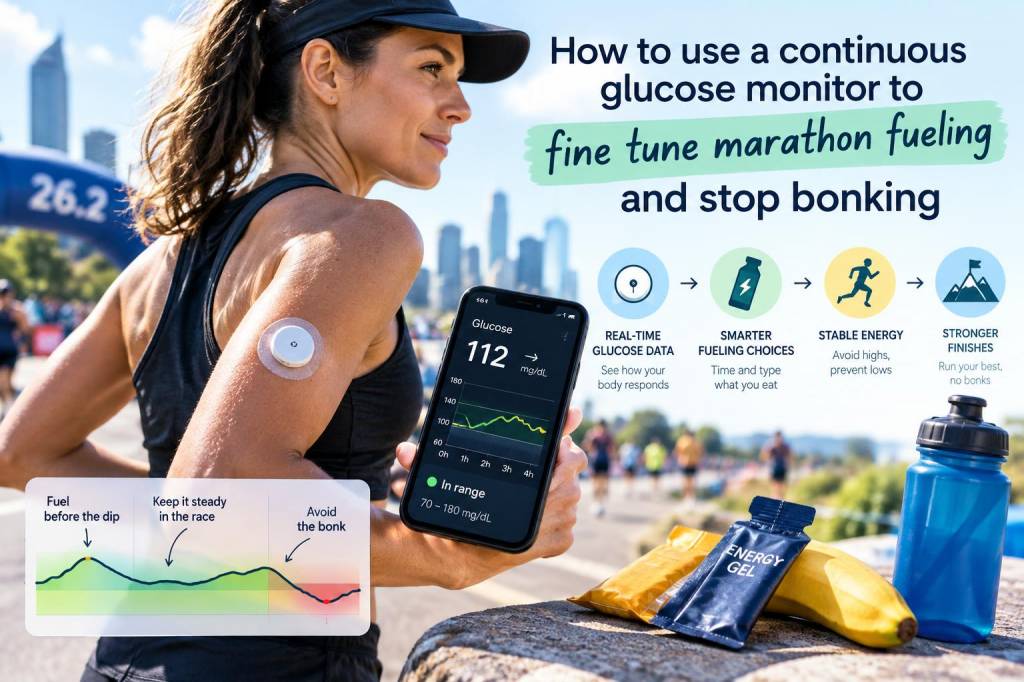
I started using a continuous glucose monitor (CGM) during marathon training because I was tired of the unpredictable “wall” that could turn a confident 20-mile training run into a crawl. Over several months I learned to read my body in a new language — numbers and trends — and to translate that into smarter fueling decisions. If you want to stop bonking and fine-tune marathon fueling, a CGM can be one of the most practical tools in your toolkit when used thoughtfully.
Why a CGM for endurance athletes?
Most of us judge energy by how we feel: strong, tired, getting shaky. A CGM gives objective, continuous feedback. Instead of guessing whether your next gel will save you, you can see the direction and speed of your glucose change and act proactively. I used devices like the Freestyle Libre and Dexcom in training, and I experimented with athlete-focused platforms such as Supersapiens that combine CGM data with nutrition guidance.
Understand the data: trends matter more than single numbers
One instantaneous glucose value is just a snapshot. What matters are the trend arrows and the rate of change. Here’s how I read common patterns:
Most CGMs report interstitial glucose, which lags blood glucose by ~5–15 minutes. That means you must treat trends, not raw numbers, especially during fast changes like after taking a gel.
Set your personal thresholds
There are no universal “good” numbers for every runner. I established my own thresholds during easy long runs and simulated race efforts. Tracks I used:
Example personal rule I adopted: if my CGM showed a steady downward arrow for more than two readings, or a drop of >1 mmol/L (≈18 mg/dL) in 15 minutes, I’d take 30–45 g of carbs (a gel + water or a small sports drink).
Design fueling around your CGM
Using CGM data allowed me to move from a one-size-fits-all fuelling schedule to a responsive plan. Here's the framework I used:
Practice gut training while monitoring glucose
One huge benefit of pairing CGM with fueling practice is confidence to increase carbs without fear of GI fallout. During long training runs I gradually raised hourly carbohydrate intake and watched how my glucose responded. If numbers stabilized and I didn’t get GI symptoms, I kept the higher intake. If the CGM showed erratic spikes then crashes, I backed off and changed form (liquid vs. gel) or dose.
Race-day strategy using CGM insights
You probably won’t wear a CGM in major races (check race rules), but your training with CGM builds an evidence-based plan. From months of data I knew:
I used CGM to practice taking the first gel before signs of a drop — around mile 10–12 in marathon pace efforts — rather than waiting to feel drained. That proactive approach prevented the sudden energy loss that felt like bonking.
Account for confounders
CGM readings are influenced by more than carbs. I learned to interpret context:
Common pitfalls and how I avoided them
When I started, I made mistakes. Here’s what to watch out for:
Practical tips and a simple fueling table
Here’s a table I used as a starting template. Adjust based on your CGM trends, body size, and gut tolerance.
| Situation | Trigger (CGM) | Action |
|---|---|---|
| Pre-run | Downtrend before start | Small snack 30–45 min before (30–40 g carbs) |
| During steady long run | Stable or slight rise | 30–60 g carbs every 45–60 min or extend interval if very stable |
| During long run | Steady downward trend | 30–45 g carbs now; reassess 15 min later |
| Rapid decline or low | Drop >1 mmol/L in 15 min or low reading | Immediate 30–45 g fast carbs + small sip of sports drink |
Safety and legal notes
If you have diabetes or metabolic conditions, consult your clinician before using or changing medications. For non-diabetic athletes, CGMs are a tool — not a replacement for medical advice. Also, verify race rules: some federations or events restrict wearable devices during competition.
Using a CGM transformed how I approach marathon fueling. It taught me to be proactive instead of reactive, to trust data and sensation together, and to iterate a plan that fits my physiology. If you’re curious, start by monitoring a few long runs, look for consistent patterns, and gradually test changes. For more ideas and race-ready strategies, I share regular updates and examples on Sport News at https://www.sport-news.uk.