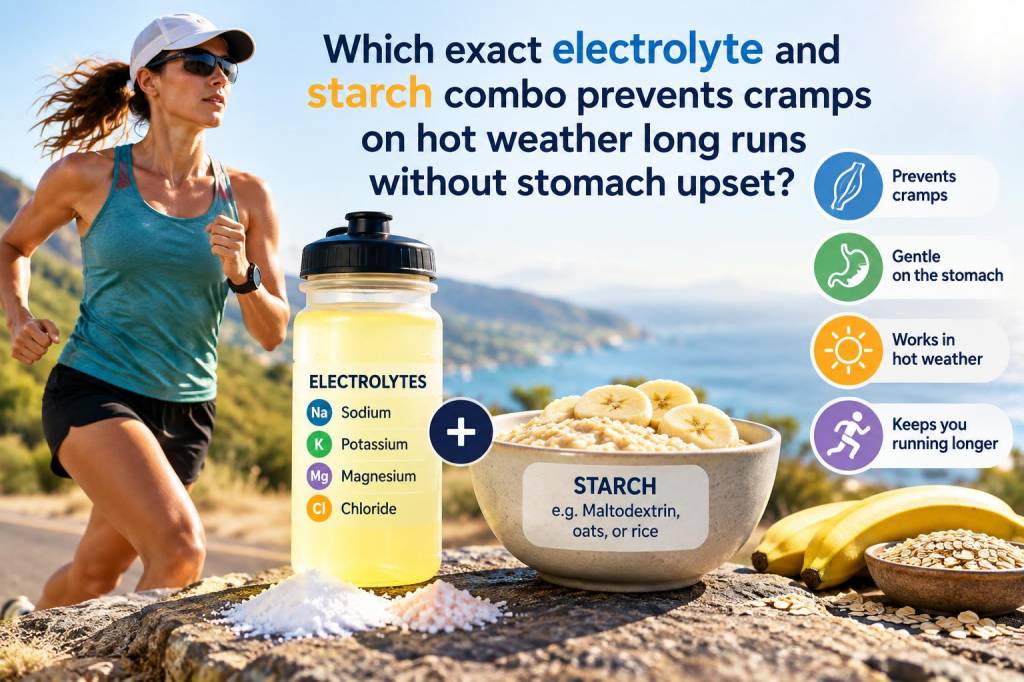
Hot-weather long runs change everything. Heat increases sweat rates and electrolyte losses, and many runners I coach (and I, too) have learned the hard way that cramps and stomach upset often come down to what we’re drinking and eating on the move. Over the years I’ve tested drinks, gels, rice cakes, blocks and DIY mixes to find what actually prevents cramping without causing GI chaos. Here’s the clear, practical approach I now use and recommend: an electrolyte profile focused on sodium-first, modest potassium and magnesium, paired with easily digested starches (maltodextrin-based with a touch of fructose) at the right concentration and timing. I’ll give exact targets, recipes, product examples, and training tips so you can trial this safely in training.
Why electrolytes + starch, not just one or the other?
Electrolytes (chiefly sodium) replace what you lose in sweat and support nerve and muscle function; carbs (starches) provide the fuel your muscles need to keep contracting without fatiguing. If you skimp on sodium in the heat you can cramp even with plenty of carbs; if you eat heavy or osmotically dense carbs you risk stomach upset. The sweet spot is a low-to-moderate osmolality, sodium-forward electrolyte mix, and predominantly glucose/maltodextrin carbs combined with a small amount of fructose for better absorption when aiming for higher rates (above ~60 g/hr).
Exact electrolyte targets (per hour) I use
These are practical targets based on sweat-rate science, common recommendations in sports nutrition, and what has worked repeatedly for me and athletes I’ve worked with:
| Electrolyte | Target per hour | Notes |
|---|---|---|
| Sodium | 400–800 mg | Hot conditions or heavy sweaters → aim higher (600–800 mg/hr). Measured as ~1/4 to 1/3 tsp table salt per hour. |
| Potassium | 100–200 mg | Helpful, but not usually the main cramp driver. Many products supply 100–200 mg/hr. |
| Magnesium | 20–50 mg | Small amounts may reduce cramping in some people; don’t overdo (can cause laxative effect). |
| Calcium | Trace–50 mg | Often present in small amounts; not usually necessary to supplement on the run. |
Exact carbohydrate (starch) targets
For hot-weather long runs I aim for:
- 30–60 g carbs per hour for most runners to prevent energy deficits and reduce cramp risk.
- Up to 90 g/hr only when you’ve trained your gut and use a multi-transport carb mix (maltodextrin/glucose + fructose) — this gives maximum absorption without GI distress.
- Prefer maltodextrin (a glucose polymer) as the primary starch because it’s easy on the stomach and low in sweetness, with 20–30% fructose added if you want to push carbs higher.
Target drink/osmolality and why it matters
Keep your on-run drink moderately dilute: aim for about 6–8% carbohydrate concentration (i.e., 60–80 g carbs per liter). Too concentrated drinks slow gastric emptying and cause stomach upset. If using gels/blocks, swallow with water to reduce concentration in the stomach.
Practical DIY recipes I use
These are easy to mix and tweak. I test them in training before race day.
| Recipe | Per 1 liter | Notes |
|---|---|---|
| Basic hot-run electrolyte drink | 500–600 ml water + 20–25 g maltodextrin + 1/4 tsp table salt (~575 mg Na) + 1/8 tsp potassium salt (optional, ~300 mg K) + squeeze of lemon | Yields ~6–7% carbs and ~575 mg sodium per liter; sip ~150–300 ml every 15–20 min in heat. |
| Higher-carb, multi-transport (for trained gut) | 500 ml water + 40–50 g carbs (maltodextrin 30–35g + sucrose/fructose 10–15g) + 1/3 tsp salt (~760 mg Na) + 25 mg Mg (magnesium citrate powder) | Good for experienced runners aiming 60–80 g/hr when supplemented with gels/chews. Keep drink volume moderate and add water elsewhere if needed. |
Product examples that match this approach
I use and recommend testing these in training:
- Tailwind Endurance Fuel — simple maltodextrin base with sodium; mild on stomach.
- Skratch Labs Hydration Mix — lower carb, sodium-forward, good for hot conditions when combined with small gels.
- Maurten Drink Mix and gels — hydrogel + high carb; many find it stomach-friendly though it has higher carb density so trial first.
- Gels like GU or Honey Stinger — choose ones you tolerate and swallow with water to avoid concentration in stomach.
Timing and how to avoid stomach upset
- Start sipping early — don’t wait until you feel thirsty. In hot runs start electrolyte intake within the first 15–20 minutes.
- Small, frequent intakes beat big gulps. I sip every 10–20 minutes rather than chugging at aid stations.
- Keep on-run meals low in fiber and fat. Pre-run meals should be 2–3 hours out and lower in fiber when it’s hot.
- Practice your exact plan in long training runs so your gut adapts. The “train your gut” principle is as important as training your legs.
- If you get queasy, switch to plain water for a few minutes and eat a small starchy bite (rice cake or a little white bread) rather than another gel.
Signs you need to adjust
- Frequent cramping despite carbs — increase sodium (toward 700–800 mg/hr) and test again.
- Bloating, nausea, or diarrhea — likely too concentrated carbs or too much sugar type you don’t tolerate; dilute drinks, lower carb rate, remove fructose if not tolerated.
- Persistent dizziness or confusion — could be dehydration, heat illness, or low sodium; stop, cool down, and seek help if symptoms severe.
To summarize the working combo I use and tell people to trial: a sodium-forward electrolyte mix providing about 400–800 mg sodium/hr, modest potassium (~100–200 mg/hr) and magnesium (20–50 mg/hr) if tolerated, paired with predominantly maltodextrin-based carbs providing 30–60 g/hr (or up to 90 g/hr with added fructose if your gut is trained). Keep drinks at ~6–8% carbs, sip regularly, and rehearse the plan in the heat so your stomach and sweat rate adapt. Try products like Tailwind, Skratch, Maurten or simple DIY mixes above — but always experiment in training, not on race day.
If you want, tell me your typical sweat rate (or how much you weigh, time spent running in heat) and what products you’ve tolerated so far — I can convert targets into exact grams/teaspoons for your plan and give a one-day trial schedule you can test safely.