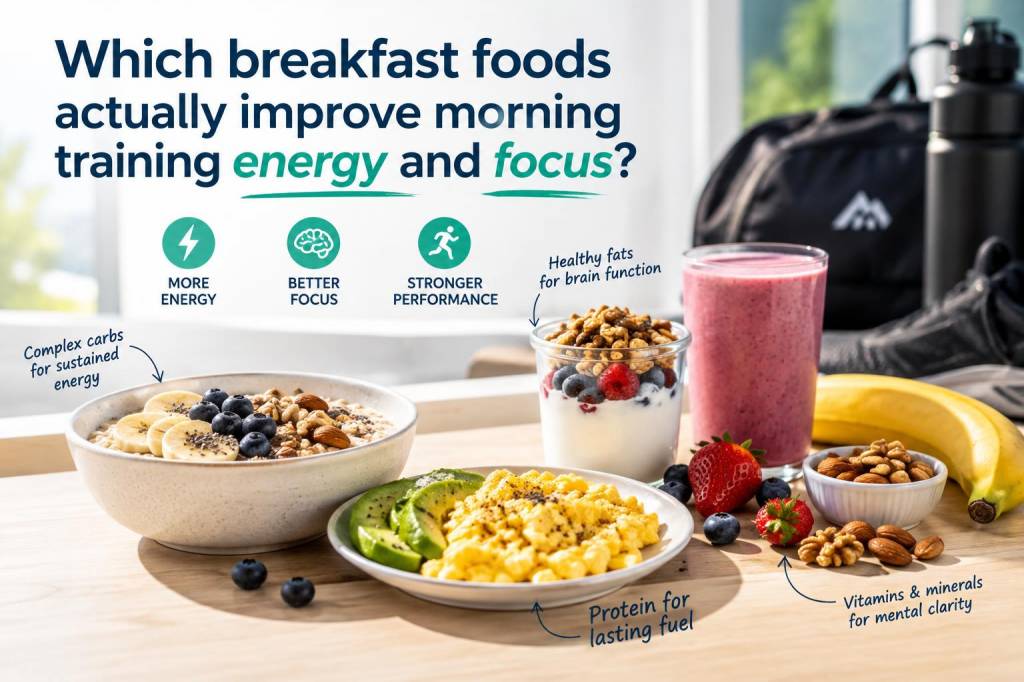
I have learned, through many early workouts, that breakfast can make or break a morning session. When I eat too little, I feel flat, distracted, and slow to warm up. When I eat too much, I feel heavy and sleepy. Over time, I have found a middle ground: a breakfast that gives me steady energy, enough focus to stay sharp, and no stomach drama once training starts.
What matters most to me is not eating a random meal just because it is morning. I want foods that actually support performance. That usually means a mix of carbohydrates for quick fuel, protein for steadier energy and muscle support, and a little fat or fiber when my workout is not too close. I have also learned that timing matters just as much as ingredients. A meal that feels perfect two hours before training may feel very different if I only have thirty minutes.
What I look for before an early workout
When I train in the morning, I usually ask myself one simple question: do I need fast fuel, or do I have enough time for a fuller meal? If I am eating 90 minutes to two hours before exercise, I can handle a more complete breakfast. If I am eating less than an hour before, I keep it lighter and easier to digest.
For energy and focus, I want food that keeps blood sugar steady rather than spiking it and crashing it. I also want something I can digest without thinking about it during the first set, first sprint, or first run interval. That is why I often prefer familiar foods over experimental ones on training days. Nothing ruins concentration faster than a breakfast that seemed healthy but sits like a brick.
Oats are still one of my most reliable choices
Oats are probably the breakfast food I trust most before morning training. They give me slow-release carbohydrates, which means I do not feel like I am running on fumes halfway through my session. I like them because they are flexible. I can make them sweet with banana and berries, or more neutral with nut butter and yogurt.
When I need more staying power, I add protein to oats. Greek yogurt, milk, soy milk, or a scoop of protein powder all work well for me. If I have a hard session ahead, oats help me feel steady rather than jittery. I especially like them before longer cardio sessions or strength workouts that begin with a warm-up and build gradually.
Bananas are simple, fast, and effective
Bananas are one of those foods that I never overthink. They are easy to digest, they provide quick carbohydrates, and they are convenient when I am rushing out the door. If I do not have much appetite first thing in the morning, a banana can still give me enough fuel to start moving without feeling overloaded.
I often pair a banana with a small amount of peanut butter or a few spoonfuls of yogurt. That combination gives me a little more balance, especially if I am training for more than an hour. A banana on its own can work for very short or moderate sessions, but I notice better focus when I add a bit of protein or fat.
Eggs help me feel more grounded
Eggs are one of my favorite breakfast foods when I have enough time to digest them. They do not give me the quick energy boost that fruit or oats do, but they do help me feel satisfied and mentally settled. I usually combine eggs with toast, fruit, or potatoes so I get both immediate fuel and longer-lasting support.
I find eggs especially useful when I have a strength session, a technical practice, or a morning where I know I need to stay mentally present. Protein seems to help me feel more stable, and that matters when I need to stay focused on form, pace, or coordination. If I eat eggs alone without enough carbohydrates, I sometimes feel underfueled, so I always pair them with something starchy or fruity.
Toast can be a performance food when chosen well
Toast gets overlooked, but I think it deserves more credit. Plain toast is easy to digest and gives quick carbohydrates. Whole grain toast adds a little more fiber and keeps me satisfied longer. I use it as a base for many pre-workout breakfasts: peanut butter and banana, honey and yogurt, avocado and eggs, or jam with cottage cheese.
What I like about toast is its flexibility. It works for short sessions, longer training, or days when I need a meal that feels light but still useful. If I am training very soon after eating, I usually choose white or sourdough bread because it is easier on my stomach. If I have more time, whole grain bread gives me a bit more staying power.
Yogurt gives me protein without heaviness
Greek yogurt is a regular part of my breakfast rotation because it offers a strong protein base without feeling heavy. I usually add fruit, oats, granola, or a drizzle of honey. That balance gives me both energy and focus. I notice that when I include protein early in the day, I am less likely to feel distracted by hunger during training.
Yogurt also works well when I do not want a full cooked breakfast. On mornings when my appetite is low, a bowl of yogurt with banana and oats feels manageable and effective. It is one of the easiest ways I know to get a meal that supports performance without taking too much time to prepare.
Fruit matters more than many people think
I used to treat fruit as a side dish, but now I see it as a real training tool. Berries, bananas, apples, oranges, and dates all offer carbohydrates that can support energy before exercise. Fruit also tends to be refreshing in the morning, which helps me feel more awake.
I especially like berries because they pair well with oats, yogurt, or toast, and they do not feel too heavy. Dates are another smart option when I need something quick and concentrated. They are sweet, compact, and useful before faster sessions. If I am training early and have little time, fruit is often the simplest way to get moving without skipping breakfast altogether.
Here is a breakfast structure I often use
Over time, I have noticed that the most effective breakfasts for morning training usually follow a similar pattern. I do not need every meal to be fancy. I just need the right balance.
| Food choice | What it gives me | When I use it |
|---|---|---|
| Oats with fruit | Steady carbohydrates and fiber | Longer sessions or moderate intensity |
| Banana with yogurt | Quick fuel plus protein | When I need something light but effective |
| Toast with eggs | Carbohydrates, protein, and staying power | Strength work or technical training |
| Greek yogurt with oats and berries | Balance, freshness, and focus | When I want a complete meal without heaviness |
| Toast with peanut butter and banana | Quick energy and a little fat for satiety | Easy to moderate morning sessions |
Foods I use carefully before training
Not every breakfast food helps me feel sharp. Some foods are healthy in general, but not ideal right before exercise. Very greasy meals slow me down. Huge portions make me sleepy. Too much fiber, especially right before a run or intense session, can cause discomfort. I have learned to respect that.
For me, heavy pastries, large amounts of fried food, and giant bowls of high-fiber cereal are not great pre-workout choices. They may taste good, but they do not always support energy or focus when I need to move quickly. I also avoid trying new foods before important sessions. Training is not the moment for surprises.
Hydration changes everything
Breakfast is not only about food. Water matters a lot, especially if I wake up slightly dehydrated. Even a small amount of dehydration can affect concentration, reaction time, and perceived effort. I usually drink water as soon as I get up, and if the workout is intense or the weather is warm, I may add electrolytes.
I have also noticed that a dry mouth or mild fatigue can feel like low energy when it is really just a hydration issue. Sometimes what I think is a bad breakfast is actually a water problem. That is why I pay attention to both.
My personal morning formula for energy and focus
If I want a simple formula, I usually build breakfast around three things: easy carbohydrates, enough protein, and a portion size that matches the workout. A banana and yogurt works when I need something light. Oats with fruit and protein work when I have more time. Toast with eggs is my move when I want both fuel and stability.
What I appreciate most is that breakfast can be adjusted. A runner, cyclist, lifter, or team athlete may need different amounts, but the basic idea stays the same: give the body fuel it can use, not fuel that makes it sluggish. I have spent enough mornings feeling underprepared to know that the right breakfast is never random.
Some mornings I keep it very simple, and other mornings I build a full plate. Either way, I am always paying attention to how my body feels once I start moving. That feedback tells me far more than any trend ever could.